
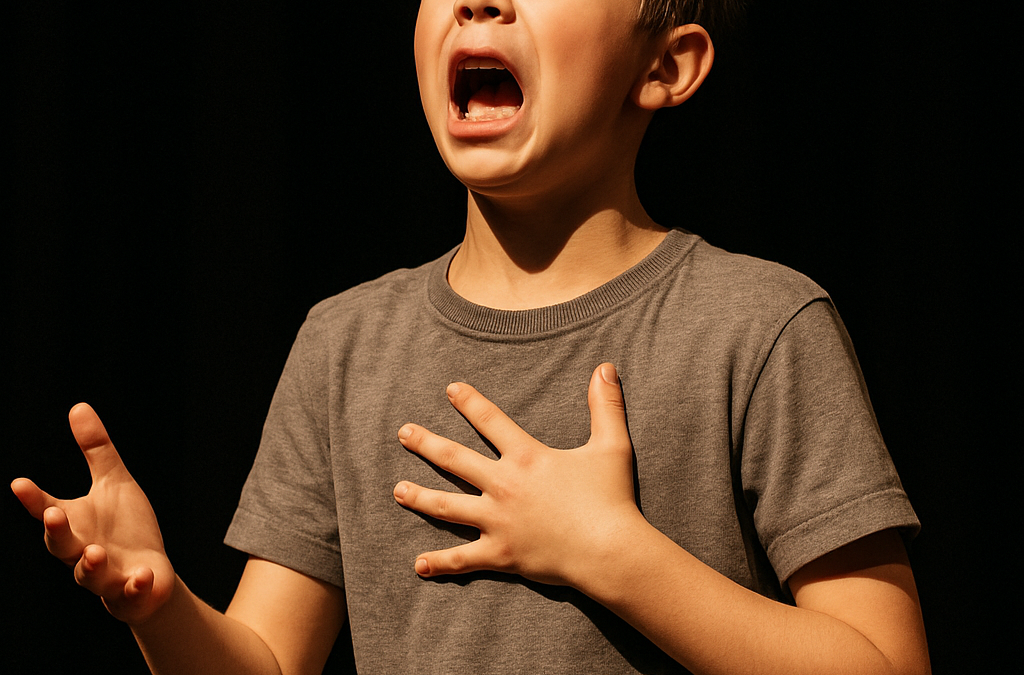
Konstantin Stanislavski was one of the most important figures in the history of acting. Born in Russia in 1863, he became frustrated with the exaggerated and artificial style of acting that was common in theatres of the time. Actors often relied on dramatic gestures, loud voices and clichés rather than believable human behaviour. Stanislavski wanted performances to feel truthful and emotionally real. His ideas changed acting forever and still influence actors today in theatre, film and television.
Stanislavski co-founded the Moscow Art Theatre in 1898. There he developed what became known as the “Stanislavski System” — a series of techniques designed to help actors create realistic and convincing characters.
The Magic “If”
One of Stanislavski’s most famous ideas was the “Magic If.” Actors ask themselves: “What would I do if I were in this situation?” This encourages performers to imagine themselves truthfully inside the circumstances of the play rather than pretending mechanically.
For example, if an actor is playing a frightened soldier, they should not simply “act scared.” Instead, they imagine how they themselves might feel if they were truly facing danger. This creates more genuine emotions and reactions.
Given Circumstances
Stanislavski believed actors must fully understand the “given circumstances” of the play. These include facts such as:
- The historical period
- The location
- Relationships between characters
- Events that have already happened
- Social class and background
An actor playing a poor servant in nineteenth-century Russia would behave differently from a wealthy modern businessperson. Understanding these details helps the actor make believable choices.
Objectives and Motivation
Stanislavski taught that every character wants something. This is called an objective. Characters are always trying to achieve goals, whether large or small.
For example:
- Hamlet wants revenge.
- Lady Macbeth wants power.
- A character in a family argument may simply want forgiveness or respect.
Actors should focus on what their character is trying to achieve rather than on “showing emotions.” According to Stanislavski, emotions often appear naturally when the actor actively pursues an objective.
Emotion Memory
Another famous part of Stanislavski’s work was emotion memory. He encouraged actors to remember personal experiences and feelings to help them connect emotionally with a role.
For instance, an actor playing grief might recall a sad moment from their own life. However, Stanislavski later became cautious about relying too heavily on painful memories, as he realised this could sometimes be emotionally unhealthy for actors.
Physical Actions
In his later years, Stanislavski placed greater emphasis on physical actions. He believed that realistic movement and purposeful activity could lead naturally to believable emotions.
Instead of trying directly to “feel sad,” an actor might focus on simple truthful actions such as folding clothes carefully after hearing tragic news. Through physical behaviour, genuine emotion may emerge more naturally.
Ensemble Acting
Stanislavski also believed theatre should be a team effort. In some older styles of theatre, famous actors tried to dominate the stage and attract all the attention. Stanislavski wanted actors to listen and react properly to one another. He believed the entire cast should work together to create a believable world.
This idea remains very important in modern acting and rehearsal processes.
Influence on Acting
Stanislavski’s influence on acting has been enormous. His ideas spread across Europe and America during the twentieth century and helped shape modern realistic acting.
In the United States, his work inspired practitioners such as Lee Strasberg, Stella Adler and Sanford Meisner. These teachers developed different approaches based partly on Stanislavski’s ideas.
Strasberg’s approach became known as “Method Acting.” Actors using Method techniques often draw deeply on personal emotions and experiences. Famous Method actors include Marlon Brando, Al Pacino and Robert De Niro.
Stanislavski also influenced British acting and drama schools. Many actors today still use ideas such as objectives, subtext, motivation and emotional truth during rehearsals.
However, not everyone agrees completely with Stanislavski’s methods. Some theatre practitioners believed realism was too limiting. For example, Bertolt Brechtpreferred audiences to think critically rather than becoming emotionally absorbed in realistic characters.
Even so, Stanislavski’s techniques remain the foundation of much actor training around the world.
Conclusion
Stanislavski transformed acting by encouraging performers to behave truthfully rather than theatrically. His ideas about objectives, emotion, imagination and realistic behaviour helped create the modern style of acting audiences now expect in film, television and theatre.
More than a century later, actors still study his work because it provides practical ways to create believable human performances. Whether on stage or screen, many of the most powerful performances today owe something to Stanislavski’s revolutionary ideas.